Contact us for fast, professional auto glass service in Las Vegas and surrounding areas.
Serving Las Vegas, NV
& Surrounding Areas
Mon-Sun: 24/7
We'll get back to you within minutes
Windshield replacement removes damaged front glass and installs a new laminated safety glass unit matched to your vehicle's specifications. Proper fit, bonding, and feature compatibility are critical for safety and visibility.
Las Vegas Auto Glass Repair provides windshield replacement with glass matched to your vehicle's configuration. Each replacement includes proper surface preparation, professional installation, and final checks for fit, visibility, and seal performance.
Windshield replacement is required when damage affects visibility, structural integrity, or proper sealing. Replacement is confirmed during inspection based on your vehicle and the damage.
Replacement is required when cracks are long, damage is in the driver's line of sight, or the edge of the glass is affected. Multiple impact points or deep damage within the laminated layers can also require replacement.
Replacement is recommended when damage exceeds repair limits based on size, location, or condition. Inspection confirms that replacement is required based on damage condition.
Windshield replacement involves removing the damaged windshield and installing a new laminated safety glass unit matched to factory specifications for proper fit and feature compatibility. It restores visibility, seal integrity, and correct mounting for camera and sensor systems.
Service includes vehicle configuration verification, safe glass removal, pinchweld preparation, primer application, controlled urethane bonding, precise glass placement, and post-install checks for fit, sealing, and visibility.
We verify compatibility with vehicle features such as camera mounts, rain sensors, HUD viewing areas, acoustic glass, and heated elements where equipped.
We offer OEM and OEM-equivalent windshield options based on specification match, feature compatibility, and availability. The goal is proper fit, clear optics, and accurate feature integration.
OEM glass is built to manufacturer specifications for fit, optical performance, and feature compatibility. It is often preferred when specific camera brackets, HUD requirements, or acoustic performance are involved.
OEM-equivalent glass is selected to match required specifications for fit, safety, and feature compatibility. Selection is based on vehicle requirements, not generic glass options.
We confirm laminated glass specifications, optical clarity, bracket type, sensor mount fit, HUD compatibility, acoustic properties, heated elements, and other embedded features where equipped.
Some vehicles require calibration after windshield replacement because forward-facing camera systems depend on precise positioning and a consistent optical path through the glass. We confirm calibration requirements during inspection based on your vehicle configuration.
Small changes in camera position or mounting can affect how safety systems interpret lane markings and distance. Calibration restores proper alignment when required.
Systems may include forward-facing cameras, lane keeping and departure features, collision warning and automatic braking systems, and traffic sign recognition where equipped.
We confirm whether calibration is required, coordinate support when needed, and document calibration status after service.
Our process focuses on fit accuracy, bond integrity, feature compatibility, and final verification. We verify vehicle configuration first, then follow controlled removal, preparation, installation, and inspection steps.
We verify the vehicle year, make, model, trim, and windshield features, including ADAS requirements where equipped. Required mouldings and brackets are confirmed, and surrounding interior and exterior areas are protected.
The windshield is removed using professional tools designed to protect the vehicle structure. The pinchweld is inspected, existing adhesive is managed, and the bonding surface is prepared with appropriate primer to support adhesion and corrosion protection.
A fresh urethane bead is applied, and the new laminated glass is positioned for proper alignment and seating. Mounts and brackets are checked, and final inspections confirm bond continuity, seal integrity, and visibility.
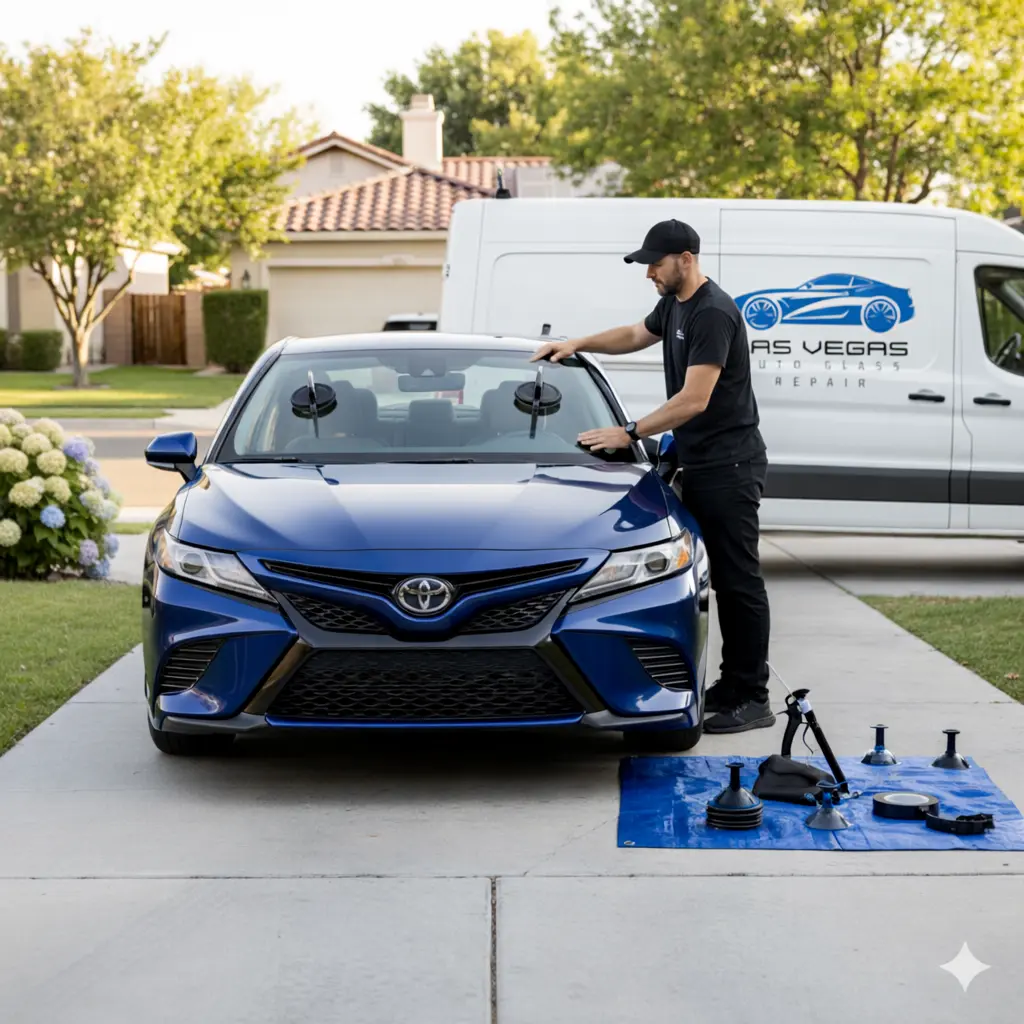
Safe drive-away time is the minimum time required for the windshield bond to reach safe strength after installation. It depends on the adhesive system and conditions at the time of service.
Cure time is influenced by the urethane adhesive used, temperature, humidity, vehicle design, and bonding surface conditions.
You receive clear safe drive-away guidance based on your vehicle and installation conditions, along with care instructions to protect the bond during the initial curing period. If ADAS calibration is required, we confirm status and next steps.
Quality is measured by fit, bond integrity, feature compatibility, and final verification. Our closeout checks focus on safety, sealing performance, and driver visibility.
We verify pinchweld preparation, primer application, consistent urethane contact along the bond line, and proper glass alignment to reduce the risk of leaks and wind noise.
We check optical clarity and distortion for driver visibility. When equipped, we verify camera mounts, sensor stability, and overall feature compatibility with the installed glass.
We document the glass option used, feature compatibility notes, calibration requirements, and workmanship warranty details.
Most replacements take 1 to 3 hours. Calibration may add additional time when required.
Cost depends on glass type, features, and calibration requirements. A clear quote outlines all included items.
Required when the vehicle uses cameras or sensors affected by the glass installation.
OEM and OEM-equivalent options are available based on your vehicle and feature requirements.
Available when conditions support safe installation at your location.
Send your vehicle details and windshield features to receive a clear quote with glass options, compatibility confirmation, calibration requirements, pricing, and scheduling.